


Acosta Verde, S.A.B. de C.V. (“Acosta Verde”, or “Company”) is a public company listed on the Mexican Stock Exchange, headquartered in Monterrey, Nuevo Leon, with presence in 17 cities in nine states of Mexico.
The purpose of this Integrated Report is to present the main achievements, challenges and results of the Company in operating, f inancial and sustainable matters during the corresponding period.
The information contained herein refers only to the operation of the 18 properties that comprise Acosta Verde’s portfolio and over which it maintains total or partial ownership. It does not include information from contractors, tenants or other entities, unless expressly stated otherwise.
It is our intention to continue publishing these reports on an annual basis.
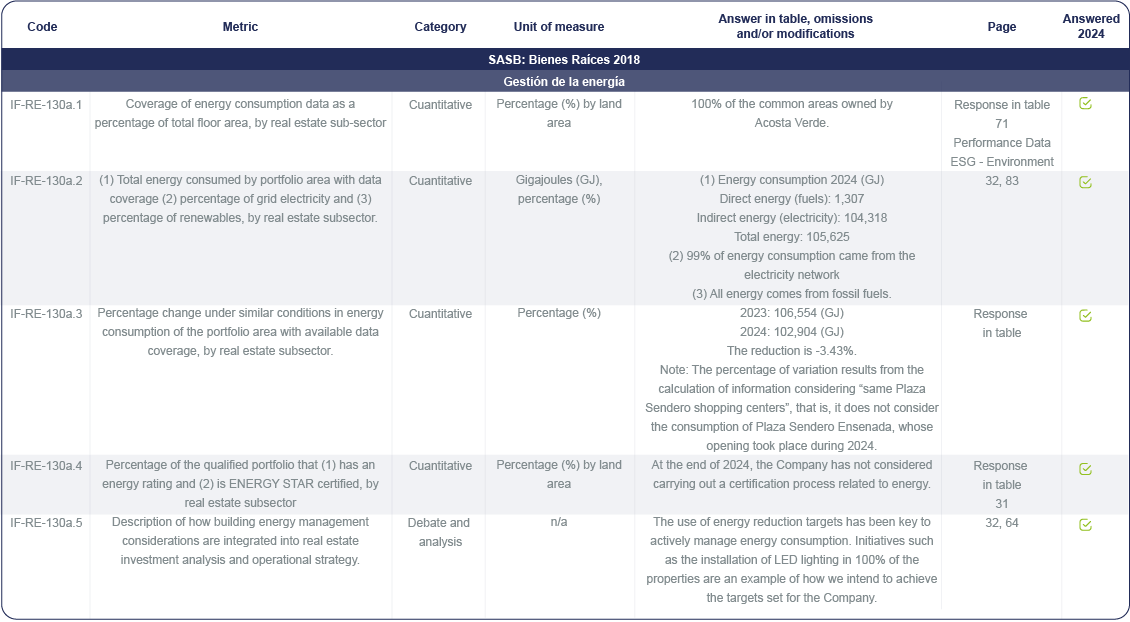
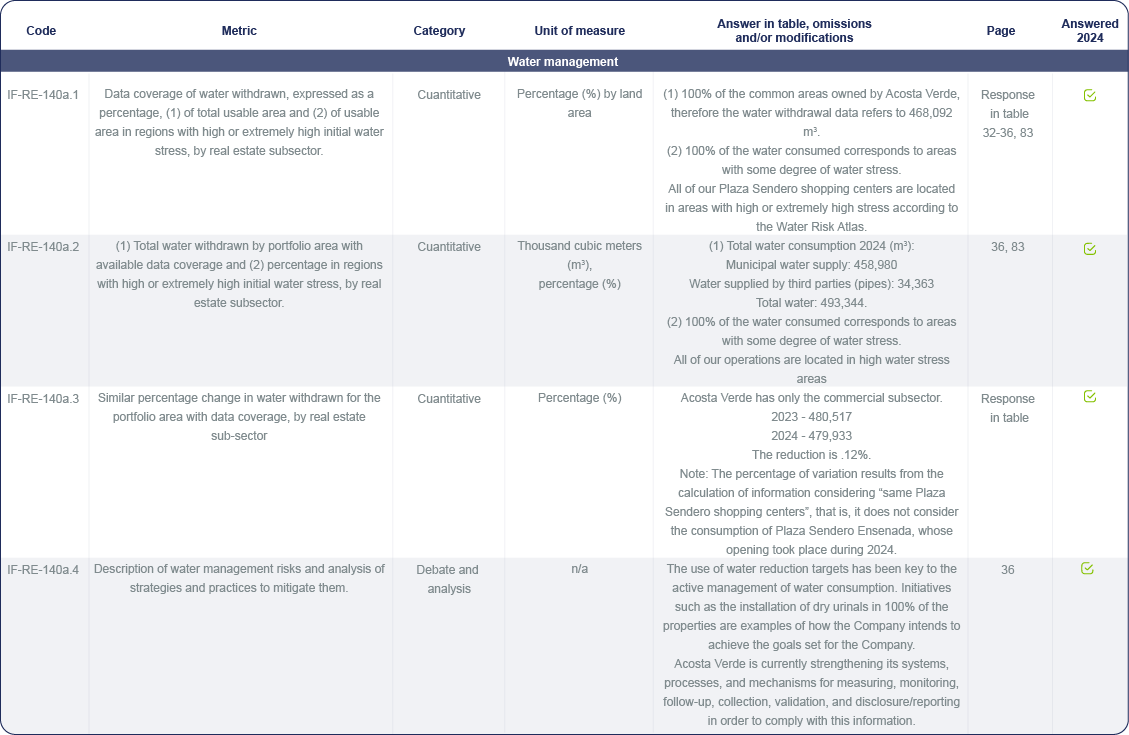
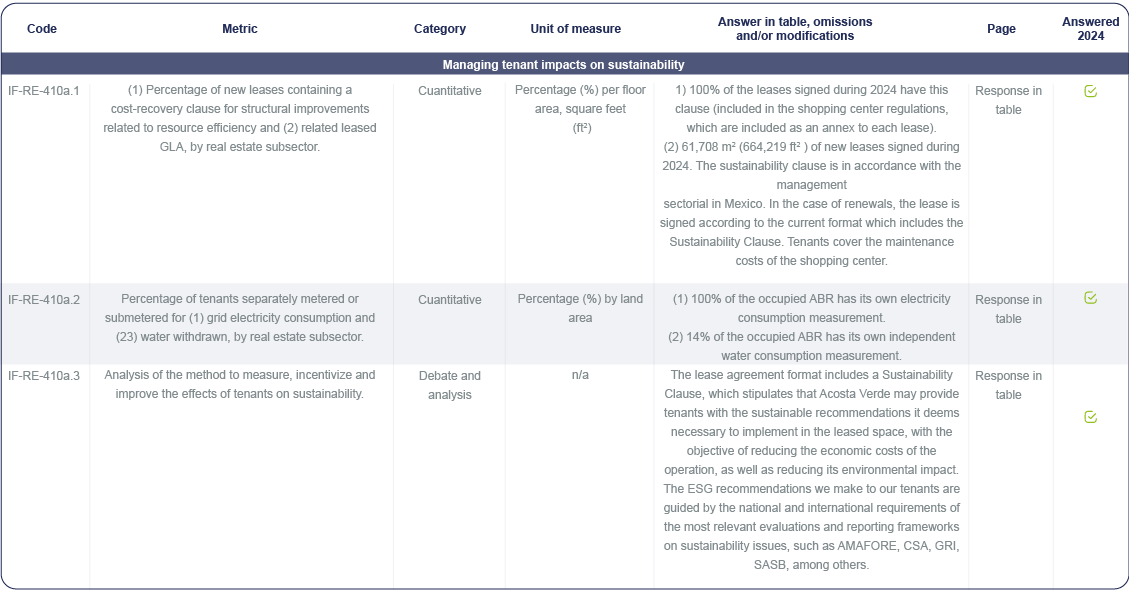
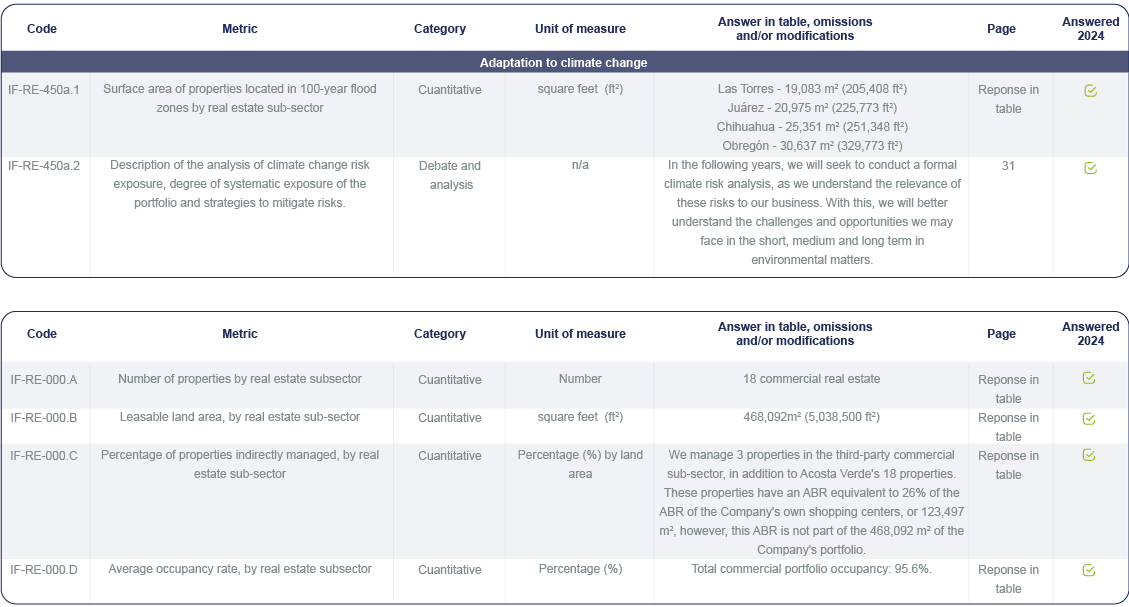
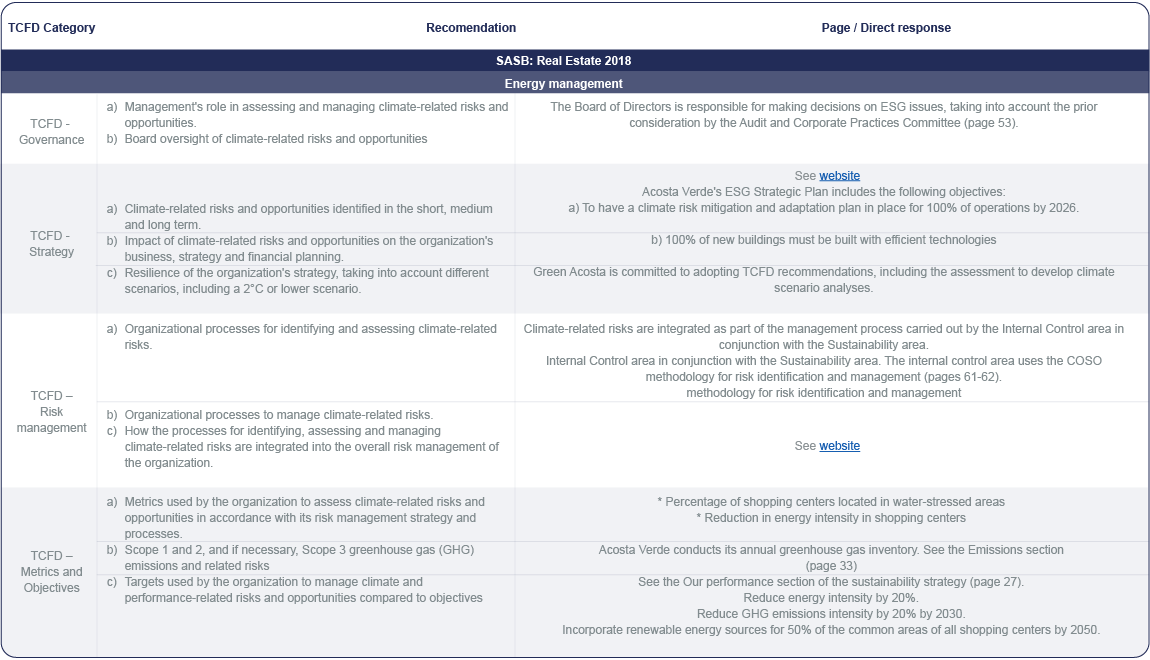
We have prepared this report in accordance with the Global Reporting Initiative (GRI) Standards, covering the period from January 1 to December 31, 2024. In addition, the guidelines of the GRI Construction and Real Estate Sector Supplement are incorporated, as well as the relevant indicators of the Sustainability Accounting Standards Board (SASB) applicable to the real estate sector. It also considers the recommendations of the Task Force on Climate related Financial Disclosures (TCFD) to strengthen transparency around risks and opportunities related to climate change.
The information contained in this report was collected and managed by the heads of each area, consolidated and validated by the internal ESG team, and has been approved by the Chief Operating and Legal Officer.
The information is governed by the criteria established in Acosta Verde’s Internal Policy on ESG Information Management, which dictates the best practices for the management of environmental, social and corporate governance information within the Company.
The highest bodies involved in the preparation and validation of the Integrated Annual Report are the Chief Operating and Legal Officer and the Chief Executive Officer of Acosta Verde, who are responsible for reviewing and authorizing its publication, ensuring that it accurately reflects the Company’s performance.
We present the following updates to the information reported in the 2024 report:
- We homologated the information on recycled waste managed by the operation of the Plaza Sendero shopping centers portfolio.
- We include in the scope 3 emissions, those generated in the common areas of each shopping center, corresponding to the property of third parties.
GRI
CONTENT INDEX
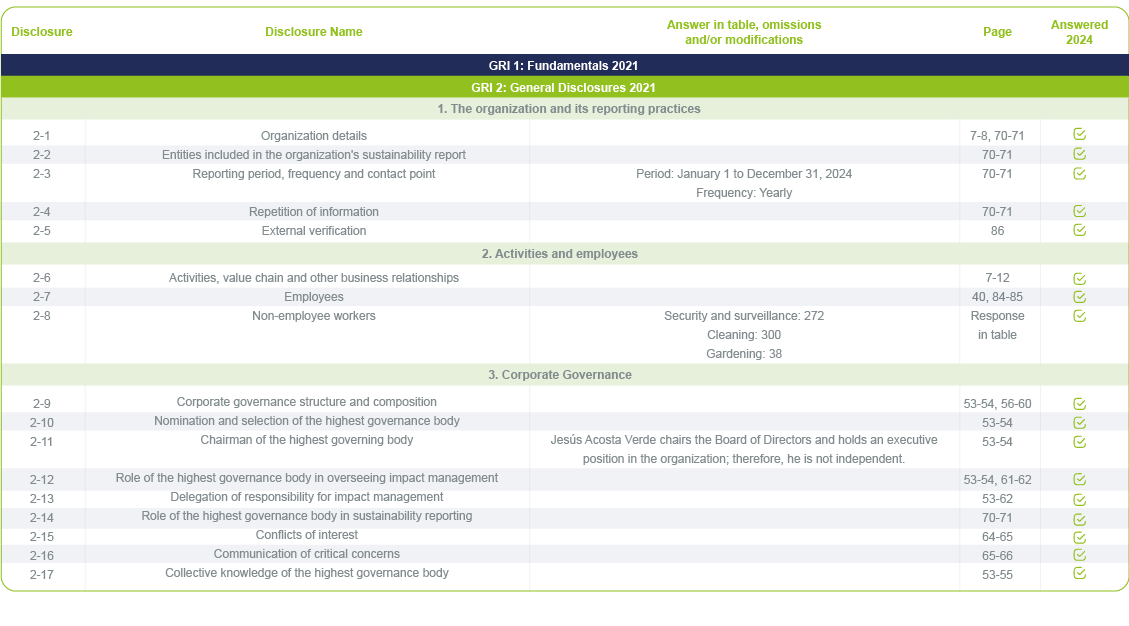
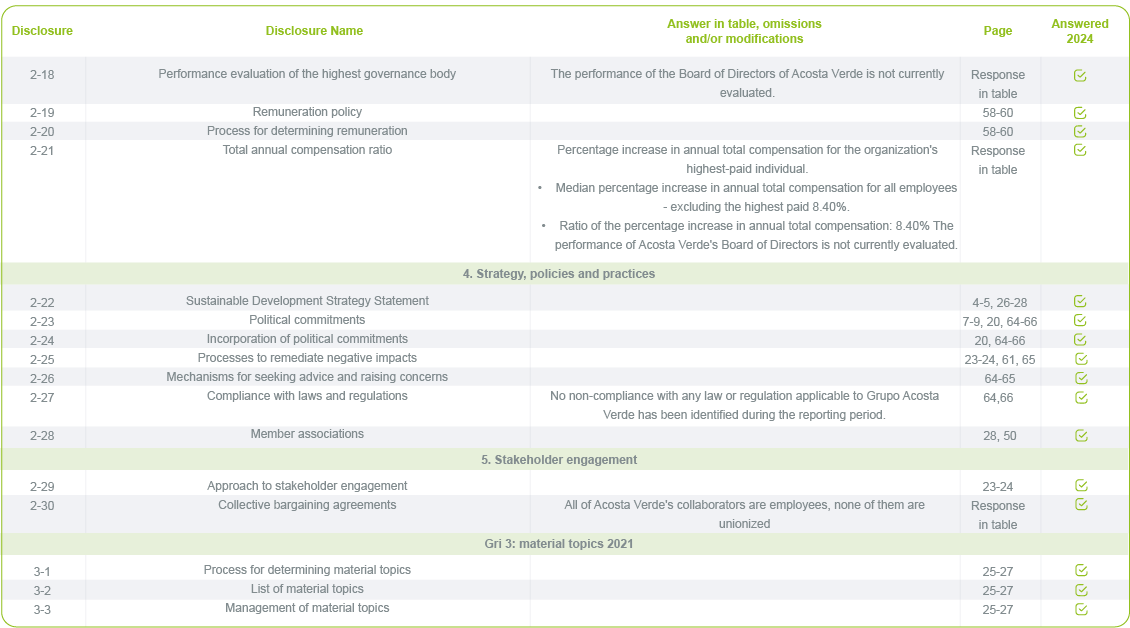
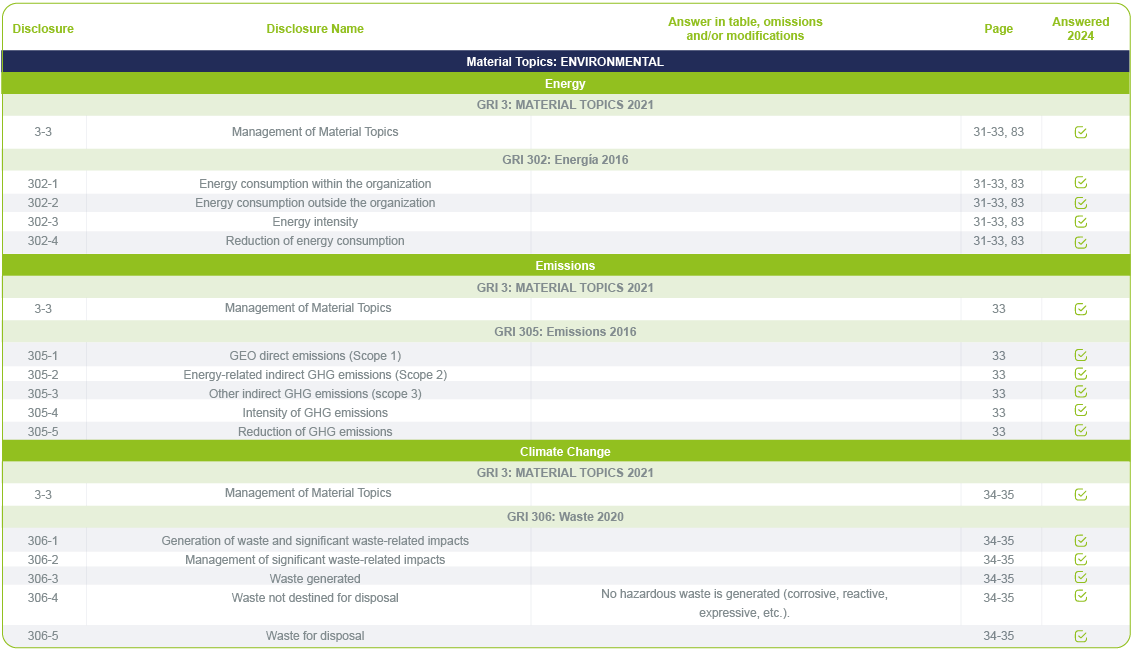
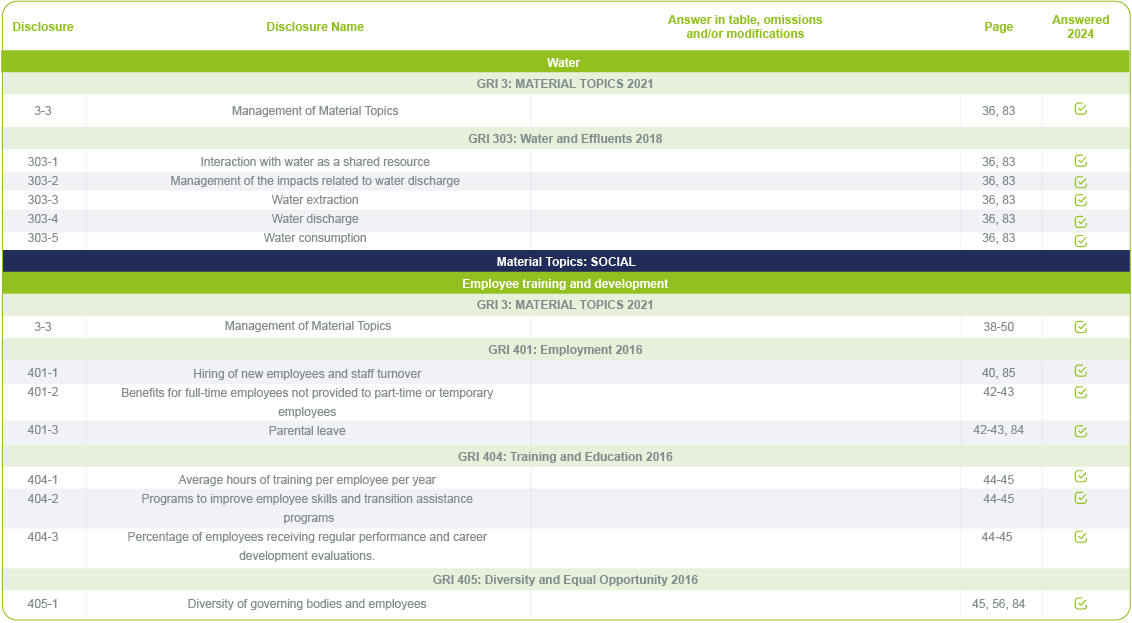
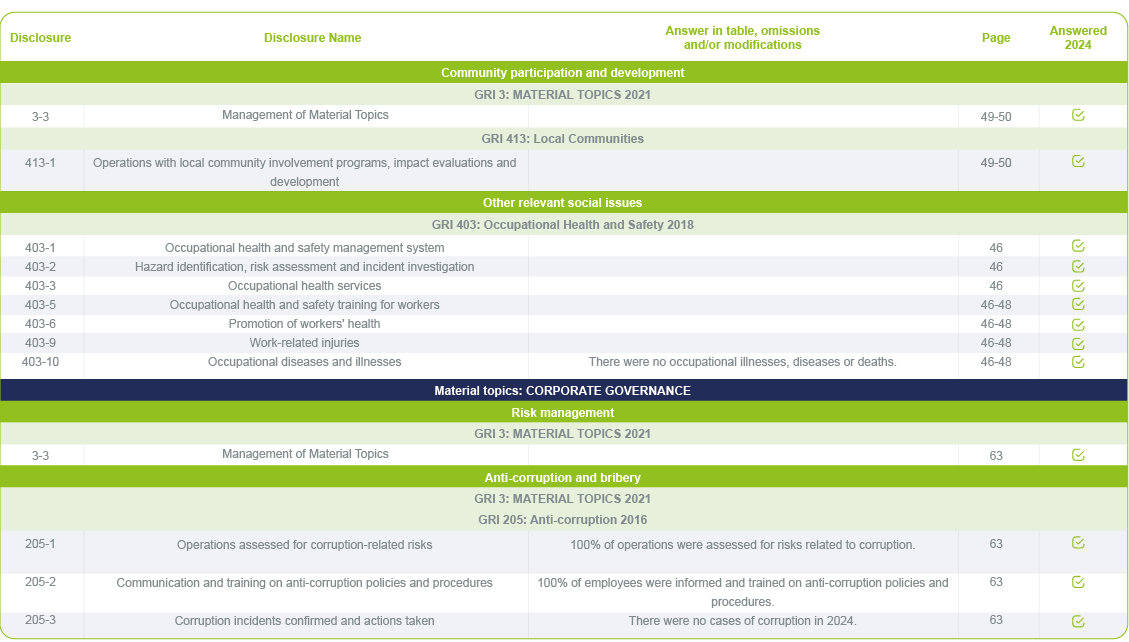
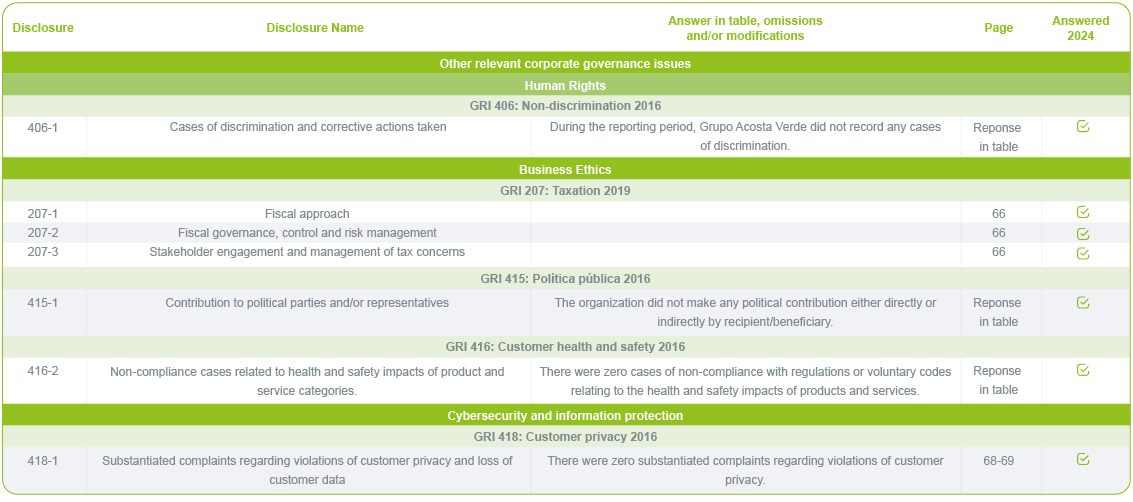
Acosta Verde Group has prepared the report in accordance with the GRI Standards for the period from January 1 to December 31, 2024.
General Disclosures
Material Topics
SASB CONTENT
INDEX
TCFD
CONTENT INDEX
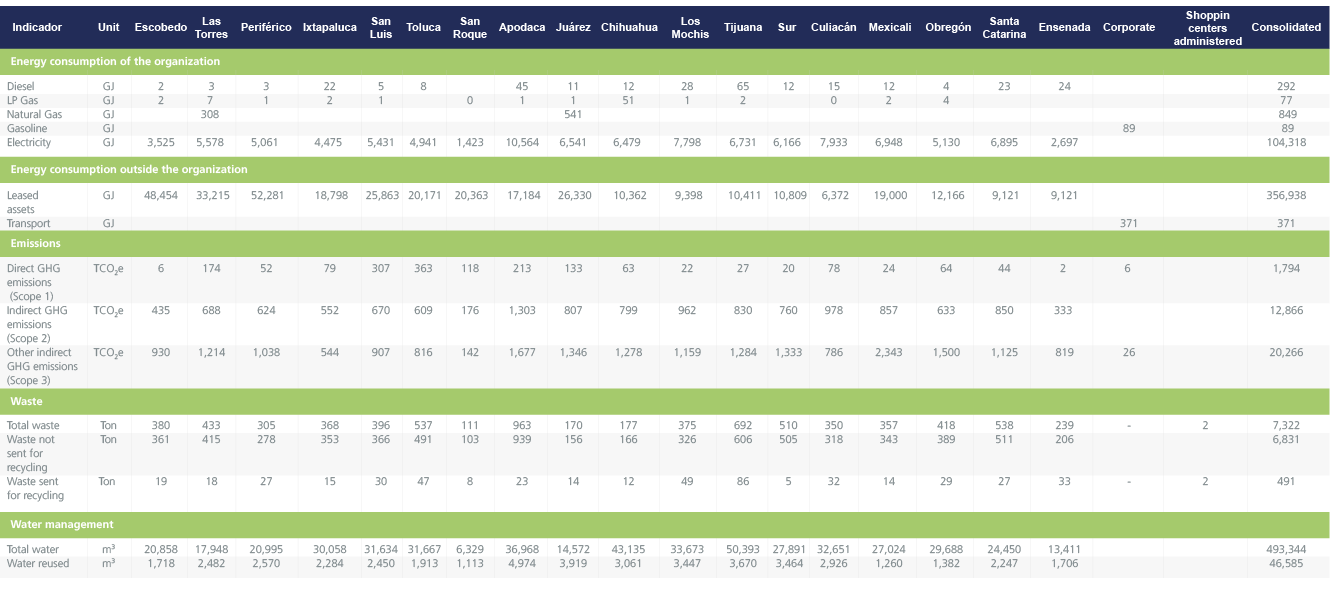
ESG PERFORMANCE
DATA
Environmental
GRI 302-1, 302-2, 303-3 || GRESB
Additional Energy Data
Social
GRI 2-7. 405-1
Team members by gender, age range, and position
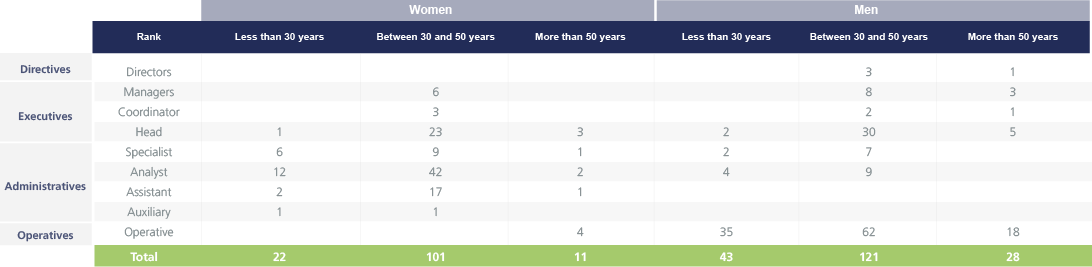
GRI 2-7
Team members by position and nationality
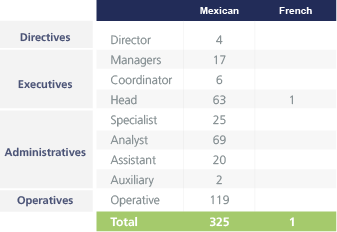
GRI 2-7
Team members with permanent contracts by region
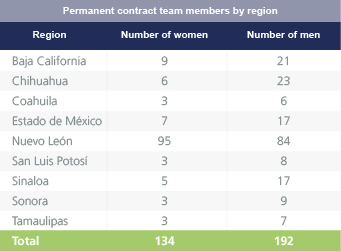
401-27
Provide information regarding parental leave
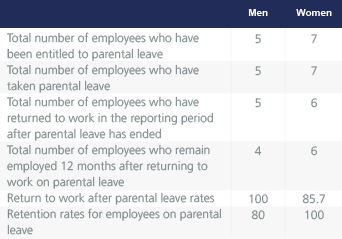
GRI 401-1
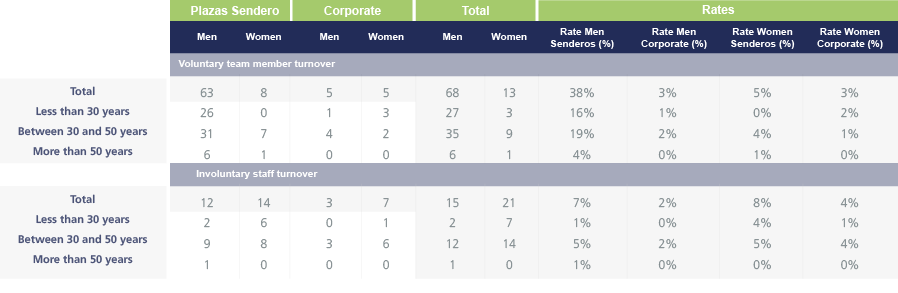
Team member turnover by place of work, gender, and age
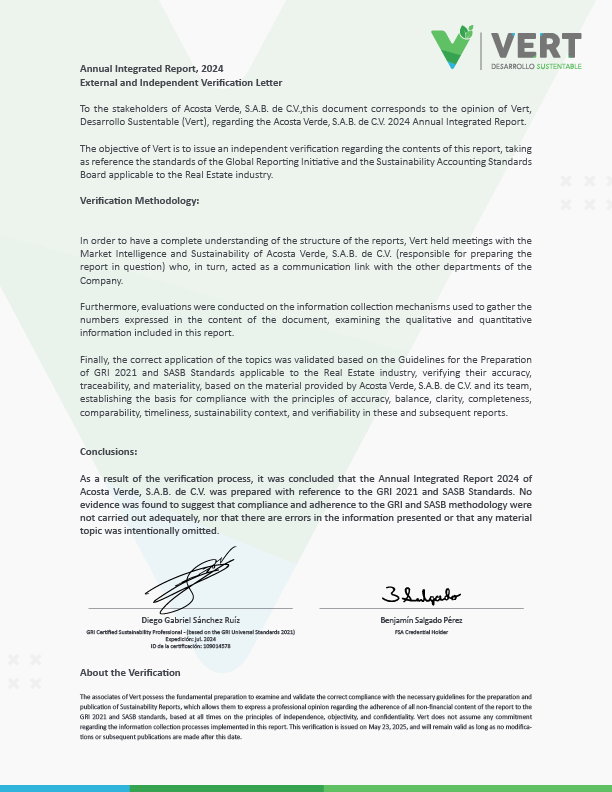
EXTERNAL
VERIFICATION
GRI
2-5
GLOSSARY
ESG: The acronym stands for Environmental, Social and Governance. It is an approach used by companies, investors and other organizations to assess and manage their impact in terms of sustainability, beyond financial performance.
AMAFORE’s Homologated ESG Questionnaire: This questionnaire seeks to compile and unify, under the same criteria, the information related to the ESG progress of national public issuers. In this way, it facilitates the evaluation and comparison of sustainability practices among companies, promoting more responsible investments aligned with ethical and sustainable criteria. Questionnaire
Greenhouse Gas Emissions (GHG): These are gaseous compounds that retain part of the infrared radiation emitted by the earth, creating a “natural greenhouse effect” that allows life on the planet. However, human activities have drastically increased their concentration, intensifying this effect and causing climatic imbalances.
Foreign Corrupt Practices Act (FCPA): A U.S. federal law whose main purpose is to prevent and punish bribery, as well as to ensure accounting transparency in companies listed on U.S. stock exchanges. This law was created to combat corruption and bribery abroad, especially in international business transactions.
Global Reporting Initiative (GRI Standards): The GRI Standards represent global best practices for publicly reporting an organization’s economic, environmental and social impacts. Sustainability reporting based on these standards provides information about the positive and negative contributions of organizations to sustainable development. https://www.globalreporting.org/
Sustainable Development Goals (SDGs): A global agenda promoted by the United Nations (UN) that establishes 17 goals and 169 targets to eradicate poverty, protect the planet and ensure prosperity for all people by 2030. They act as a universal roadmap for governments, companies, organizations and citizens to work together for a fairer, more equitable and sustainable world.https://www.un.org/sustainabledevelopment/es/objetivos-de-desarrollo-sostenible/
United Nations Global Compact: This is the world’s largest corporate sustainability initiative. It aims to align the strategies and operations of companies with Ten Universal Principles on human rights, labor standards, environment and anti-corruption.https://pactoglobal.org.mx/
Sustainability Accounting Standards Board (SASB): These are industry standards that help companies identify, manage and communicate sustainability issues that are financially material to their industry. In other words, those issues that can really affect the value of the company in the medium and long term.https://sasb.ifrs.org/
Task Force on Climate-related Financial Disclosures (TCFD): an initiative created by the Financial Stability Board (FSB) in 2015 with the objective of improving the transparency of climate risks and opportunities in financial markets.https://www.fsb-tcfd.org/
❯
CONTACT
GRI 2-3
Hernán Treviño De Vega
Chief Legal and Operations Officer
sostenibilidad@grupoav.comRosalinda Fernández Castillón
CFO
sostenibilidad@grupoav.comHEADQUARTERS
Pedro Ramírez Vázquez 200 Torre 1.
Colonnia Valle Oriente
Parque Corporativo Valle Oriente
San Pedro Garza García, N.L México
C.P 66269